


BOXING GLOVE BUYERS GUIDE PART 1
The Ultimate Guide to Boxing Gloves: Materials & What’s on the Outside (Part 1)
Whether you are an elite competitive fighter or someone who trains Boxing, Muay Thai, or MMA for fitness and self-defence, your hands take a massive amount of punishment. Over years of training, you will strike thousands of heavy punching bags, focus pads, and Thai pads. Protecting your hands is non-negotiable if you want to stay in the sport long-term.
Having trained, competed, and coached boxing and Muay Thai for over 30 years, I still expect many more years of high-performance use out of my hands. If you plan to hit the heavy bag, focus mitts, or step into the ring to spar, you must know how to select the right gear.
This multi-part boxing glove guide answers the most frequently asked questions about glove construction, durability, and cost to help you make the smartest investment for your hands.
What to Look For, When Buying Boxing Gloves
When choosing your next pair of combat gloves, you need to consider five structural elements:
- Part 1: Outer Materials: Leather vs synthetic materials (Detailed below).
- Part 2: Inner Foam Construction: Injected Moulded Foam (IMF) vs layered foam.
- Part 3: Wrist Support & Thumb Attachment: Crucial elements for preventing hyper-extension.
- Part 4: Glove Type: Deciding between dedicated bag gloves or all-purpose training/sparring gloves.
- Part 5: Sizing & Palm Grips: Finding the right ounce (oz) weight and grip bar setup.
- Part 6: Boxing vs. Muay Thai Gloves: Understanding the real design differences between the two disciplines.
Boxing Glove Outer Materials Compared
The material on the outside of your glove dictates its lifespan, comfort, and price point. The four primary materials used today are Genuine Leather, Microfibre, PU (Polyurethane), and Vinyl. Let's look closely at the gold standard: Genuine Leather.
1. Real Leather Boxing Gloves
Genuine leather remains the undisputed king of combat sports gear due to its natural stretch, breathability, and unmatched durability. However, not all leather is created equal:
- Cowhide Leather: The premium choice. It is the most expensive, supple, and longest-lasting material available. It moulds perfectly to your knuckles over time.
- Buffalo Leather: Slightly coarser than cowhide (you can often see distinct hair follicle marks). While less smooth, high-quality buffalo leather can be just as durable as cowhide.
The Importance of Leather Thickness
Leather can be split into multiple thin layers during manufacturing. The more times it is split, the thinner, weaker, and cheaper it becomes. High-quality boxing gloves use a leather thickness between 0.5mm and 1.0mm. Top-tier gloves utilize full-grain or top-grain cowhide that is a minimum of 1.0mm thick to ensure the seams don't rip under heavy impact.
Brand & Manufacturing Quality
- Thailand Manufacturers: Brands like Twins Special, Fairtex, and Top King are world-renowned for using premium, thick, top-grain leathers perfectly suited for Muay Thai.
- Premium Global Brands: Industry leaders like Rival Boxing and our own Australian-tested Ringsport gear prioritize thick, high-grade cowhide engineered to withstand daily gym abuse.
- Sourcing Variations: Manufacturers in Pakistan, India and now China produce a massive range of gear. While they make some of the world's highest-quality leather boxing gloves, they also produce thin, cheap leather options depending on the budget and price point a retailer asks for.


Top-Tier Brands & Sourcing
The origin of your gloves can tell you a lot about their build quality. Brands like Ringsport and Top King produce premium lines manufactured directly in Thailand, utilizing top-shelf local leathers. On the other hand, innovative brands like Rival Boxing manufacture high-end leather gloves out of specialized facilities in Pakistan.
Ultimately, choosing a boxing glove crafted from high-quality cowhide leather is the gold standard for long-term durability, natural odour control, and an ergonomic fit that contours to your hand over time.
Microfibre: The New Tech Challenger
Microfibre is a highly engineered, synthetic material making massive waves in the combat sports industry. While technical data is still emerging, it is rapidly proving to be a formidable rival to traditional cowhide.
- The Proof is in the Training: Leading innovators like Rival Boxing (Canada) have spearheaded microfibre glove lines manufactured in China. In our own commercial boxing gym, we put a pair of Rival RB10 microfibre bag gloves through relentless daily abuse by a competitive fighter for over two years. Upon regular inspection, they remain in exceptional structural condition with absolutely zero odour.
- Built-in Odour Control: Most microfibre gloves on the market incorporate targeted mesh palms. Because synthetic materials don't hold moisture the same way raw hide does, this mesh integration creates a highly breathable environment that actively fights bacteria and bad smells.
- The Future of Combat Gear: As the cost of global raw cowhide leather continues to climb, expect to see high-performance microfibre used more frequently by premium manufacturers. It matches—and sometimes surpasses—the durability of real leather without the premium price tag

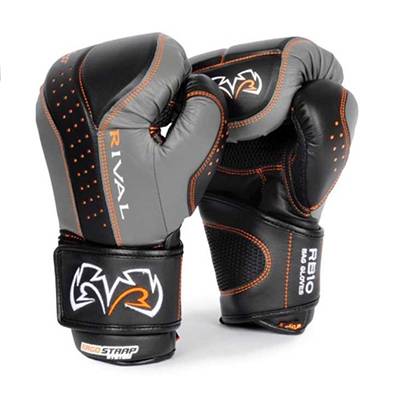
Both gloves above are high quality gloves made from micro fibre
PU (Polyurethane): The Entry-Level Option
Polyurethane (PU) is a synthetic, mass-produced material commonly found in budget-friendly combat gear. While brand-new PU gloves look clean and feel surprisingly soft on the shelf, the material has significant long-term performance limitations.
- The Durability Issue: Under the heat and repeated high-impact stress of heavy bag workouts, PU tends to crack, peel, and separate from its fabric backing material relatively quickly.
- The Odour Trap: Unlike natural leather or engineered microfibre, standard PU is non-porous and highly prone to trapping sweat. This moisture retention causes the inner foam and outer lining to develop a strong, unpleasant smell over time.
- Why It’s So Common: Because PU is one of the cheapest materials to manufacture, it is widely used across the industry. Even some major, big-name global brands use it to cut costs, especially in low-impact areas like the palms or thumbs of their mid-tier glove lines.
When Should You Buy PU Gloves?
PU boxing gloves are perfectly fine as a low-cost, entry-level option. If you are completely new to the sport and want to test out a fitness class before investing in premium gear, a basic synthetic glove makes financial sense.
However, if you fall in love with the sport and plan to hit the gym more than twice a week, you should avoid PU entirely. The repetitive impact will quickly break them down, meaning you will spend more money replacing cheap gloves than you would investing in a single, high-quality pair of leather or microfibre boxing gloves.
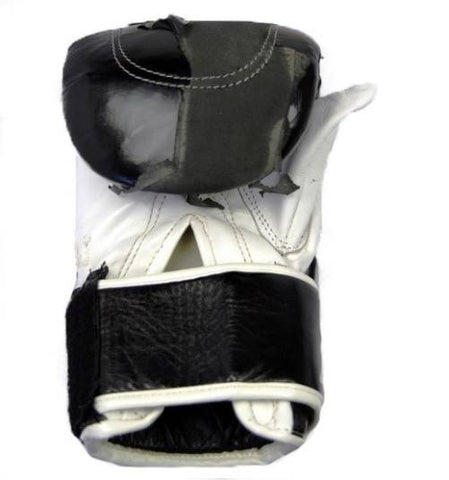

Above is PU material separation on a cheaper bag mitt
Vinyl: The Heavy-Duty Budget Material
Vinyl is another common synthetic option found at the lower end of the pricing spectrum. While vinyl is generally tougher and longer-lasting than standard PU, it comes with its own set of distinct drawbacks under heavy training conditions.
- The Split Risk: Under the constant impact of heavy bag work, vinyl lacks the natural stretch of genuine leather. Because of this rigidity, it frequently splits right along the stitching lines at high-pressure zones—specifically around the thumb attachment and the front curl of the fist where maximum impact occurs.
- The Breathability Problem: Just like PU, vinyl acts as a moisture trap. It does not breathe, meaning sweat builds up fast inside the lining, making vinyl gloves highly prone to developing severe, stubborn odours. For consistent training, it is a material best avoided if your budget allows.


Vinyl is a durable material but tends to split at the stitched areas
Advanced Synthetic & "Semi-Leathers"
Beyond basic vinyl and PU, the combat sports industry has engineered high-tech, proprietary non-leather materials. While no one is an expert on every single synthetic variant flooding the market, a few specialized brands have created incredibly durable, economical alternatives to premium cowhide.
- Top King's "Semi-Leather": This premium synthetic variant is exceptionally durable. It mimics the texture, grain, and flexibility of real hide so closely that it is almost impossible to tell apart from genuine leather by sight or feel.
- Punch Equipment's "Punchtex": Another highly successful non-leather technology. It offers commercial-grade durability and a premium feel at a fraction of the cost of raw cowhide, making it a very smart, economical choice for everyday gym use.
Coach's Tip: Where Synthetics Actually Excel
High-grade synthetic and semi-leather materials are excellent choices for gear like shin guards, belly pads, and focus mitts. Because these items are open to the air and don't trap sweat in an enclosed space like a boxing glove does, they dry out quickly, don't hold bad odours, and can easily match the lifespan of real leather.
Leave a comment
Comments will be approved before showing up.